

Anatomy in Action: The Surprising Ways Your Pet's Skeleton Dictates Their Unique Quirks.
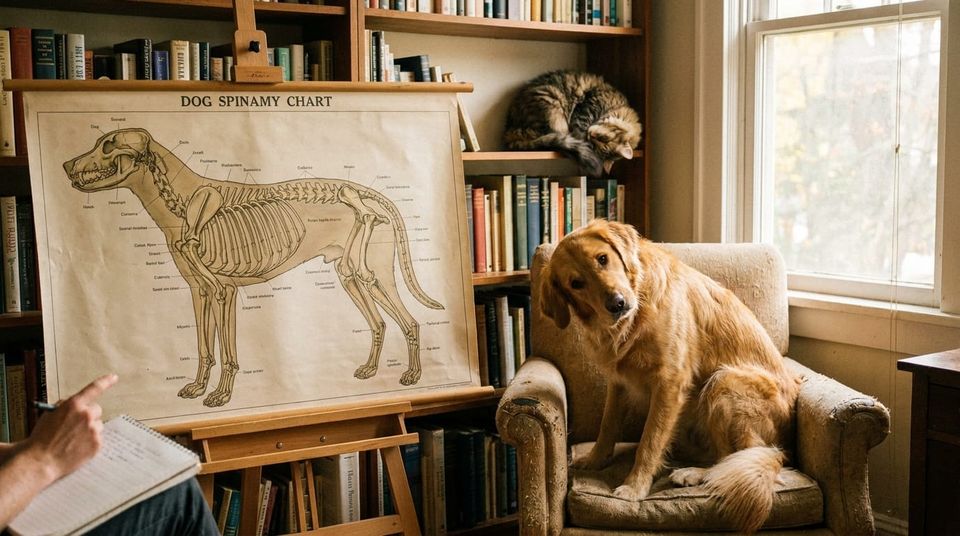
The world blurs into a streak of green and brown as the Greyhound explodes across the field, a living arrow whose only purpose is speed. Every muscle fiber, every beat of its massive heart, serves a single function. A few miles away, a cat defies gravity, flowing like liquid up a bookshelf to settle on the highest point, surveying its domain with regal indifference. These moments of breathtaking athleticism and bewildering flexibility aren't just quirks; they are a masterclass in biomechanics, dictated by an invisible framework of bone and cartilage. The secret to your pet's most astounding and peculiar behaviors lies hidden beneath their skin, in the elegant and efficient architecture of their skeleton.
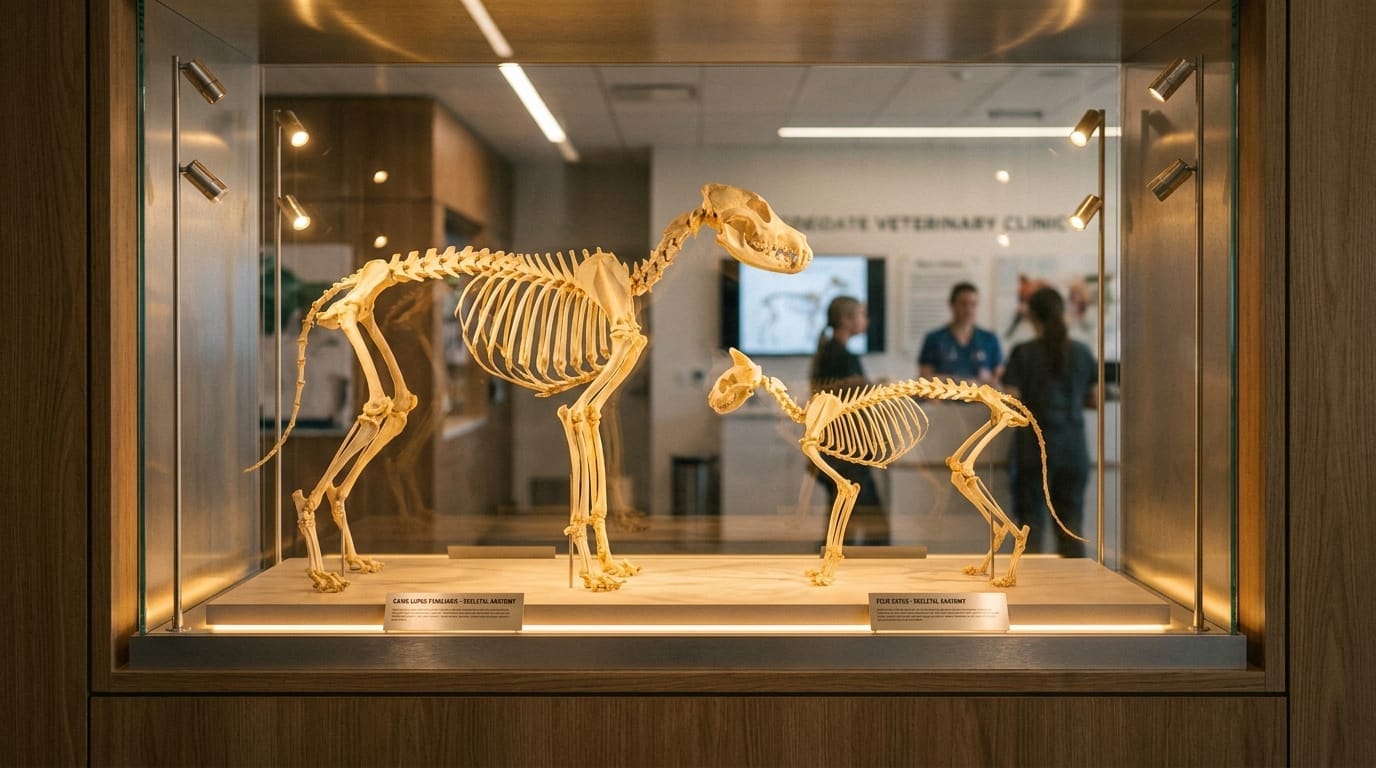
Every animal's skeleton is a story written in bone, a blueprint passed down through generations that tells of survival, purpose, and adaptation. The long, delicate legs of a sighthound speak of chasing down swift prey across open plains. The powerful, compact frame of a terrier tells a tale of digging into the earth, fearless and determined. For our feline friends, a spine of incredible elasticity and a unique shoulder structure are the tools that make them apex ambush predators, capable of silent stalks and explosive pounces. Their very essence is shaped by the bones that support them.
Understanding this connection between anatomy and action does more than just satisfy our curiosity. It transforms how we see our companions. That seemingly lazy cat isn't just napping; it's conserving energy for a burst of activity its body is perfectly designed for. That dog pulling on the leash isn't just being stubborn; it might be following a scent with a nose housed in a skull specifically shaped for the job. By looking at the 'why' behind their physical forms, we gain a deeper appreciation for their needs, their instincts, and the incredible evolutionary journey that brought them into our homes.
- A pet's unique behaviors and physical abilities are directly linked to their skeletal structure.
- The skeleton reveals an animal's ancestral purpose, whether it was for running, digging, or climbing.
- Understanding your pet's anatomical design helps you better appreciate their natural instincts and care needs.
- From a cat's flexibility to a dog's speed, specific bone structures are responsible for their most defining characteristics.
The Blueprint of Behavior
The link between a pet's skeleton and its behavior is not just theoretical; it's visible in their every move. Take the cat's legendary ability to always land on its feet. This is made possible by an exceptionally flexible spine and the absence of a rigid collarbone. A cat's clavicle is a tiny, 'floating' bone, which allows it to dramatically rotate its torso mid-air and squeeze its shoulders through any opening its head can fit through. It's a skeletal superpower that defines their slinky, almost supernatural movement.
In the canine world, skull shape is a powerful predictor of behavior. Breeds are often categorized by their skull type. Dolichocephalic, or long-skulled, breeds like Greyhounds and Collies have a wide field of vision, making them excellent at spotting movement from a distance. In contrast, Brachycephalic, or short-skulled, breeds like Pugs and French Bulldogs have a skeletal structure that prioritizes a powerful bite over scenting ability or endurance. Their anatomy doesn't just give them a unique look; it gives them a unique way of experiencing the world.
Frequently Asked Questions
Why can my cat squeeze into such tiny spaces?
A cat's uncanny ability to pour itself into small containers and tight gaps is a direct result of its unique skeletal anatomy. The key feature is its vestigial clavicle, or collarbone. Unlike humans, whose collarbones are large and firmly connect the sternum to the shoulder blades, a cat's clavicles are tiny, unattached bones embedded in muscle. This 'floating' shoulder structure allows them to compress their bodies and pass through any opening that is as wide as their head.
This incredible flexibility is a remnant of their wild ancestry, where the ability to pursue prey into narrow crevices or escape from larger predators was a significant survival advantage. Their whiskers also play a part, acting as tactile sensors that measure the width of an opening before they attempt a passage. It's a perfect combination of skeletal freedom and sensory feedback.
What makes breeds like Greyhounds and Whippets so fast?
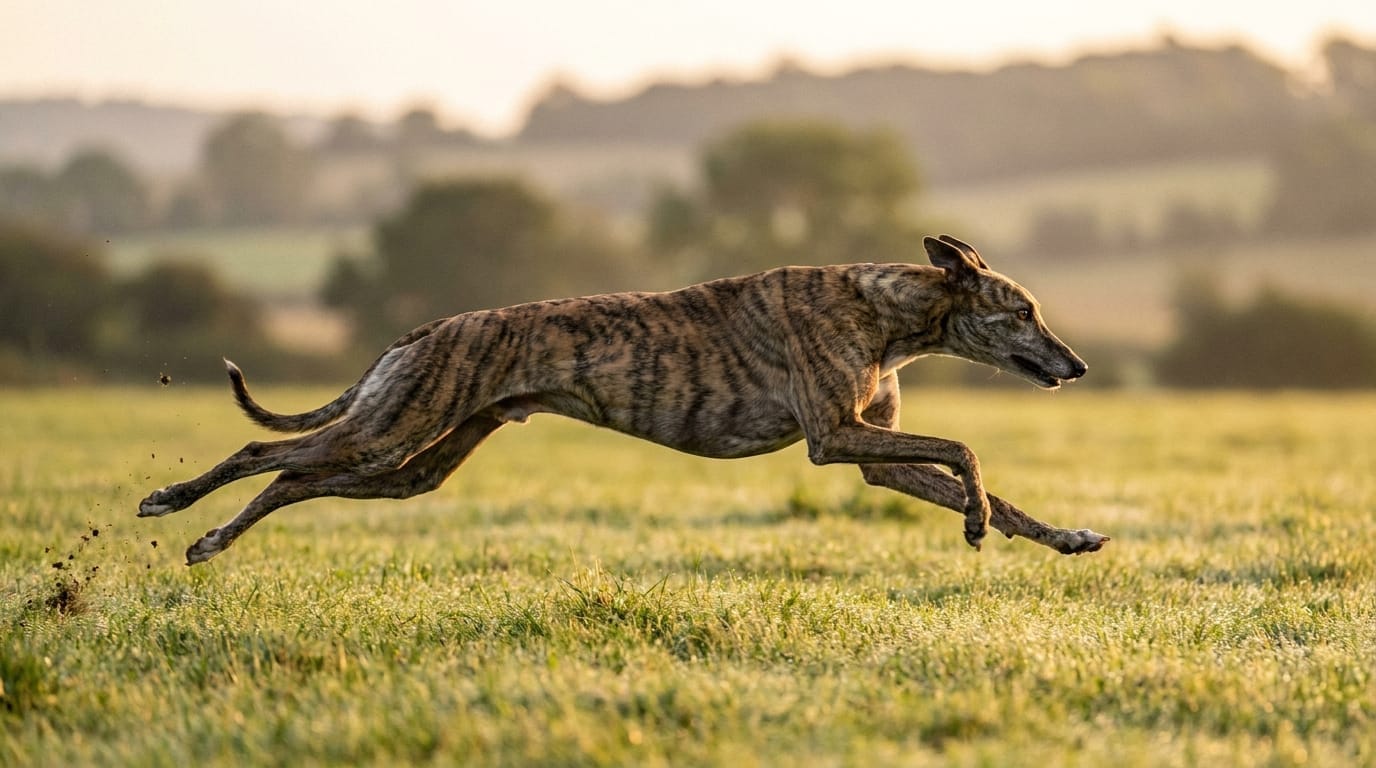
Sighthounds like Greyhounds and Whippets are biological marvels engineered for speed, and their skeletons are the primary reason. They possess a deep, narrow chest that provides ample room for an unusually large heart and highly efficient lungs, maximizing oxygen uptake during a sprint. Their spine is incredibly long and flexible, acting like a coiled spring. As they run, the spine arches and straightens, launching the dog forward and allowing for a 'double suspension gallop' where all four feet are off the ground twice in each stride.
Furthermore, their long legs and small, low-volume muscles reduce weight at the end of their limbs, allowing for a faster leg turnover. Every aspect of their skeletal frame, from the angle of their shoulder blades to the length of their loin, is optimized for generating explosive, ground-covering speed. They are not built for endurance, but for short, spectacular bursts of acceleration.
Is a Pug's flat face just for looks, or does it have a skeletal reason?
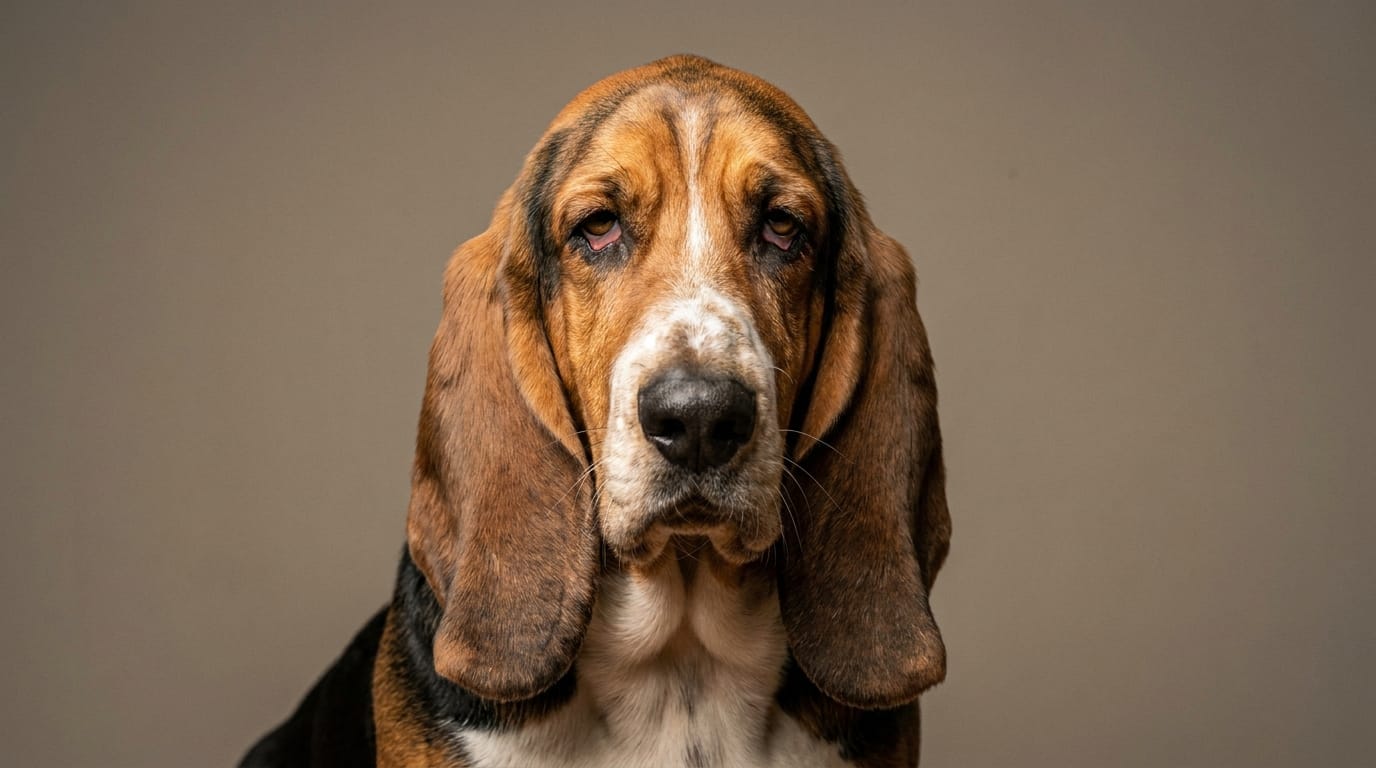
The distinctive flat face of a Pug, Bulldog, or other brachycephalic breed is the direct result of a skeletal structure that has been significantly altered by selective breeding. These breeds have a condition known as brachycephaly, which is characterized by a drastically shortened skull and upper jaw bones. While this creates the endearing, baby-like expression that many people love, it is a significant anatomical deviation with serious health implications.
This compressed skeletal structure crowds all the normal soft tissues of the nose and throat into a much smaller space, leading to narrowed nostrils (stenotic nares), an elongated soft palate, and a constricted windpipe. These issues are the direct cause of the snorting, snoring, and breathing difficulties common in these breeds. So, while it contributes to their 'look', it is a fundamental skeletal modification that directly impacts their health and well-being.
How does a dog's tail bone structure affect its communication?
A dog's tail is far more than an accessory; it's a complex and expressive extension of its spine. The tail is composed of a series of vertebrae known as caudal vertebrae, which become progressively smaller toward the tip. The number of these vertebrae varies by breed, determining the tail's length. Attached to these bones are intricate sets of muscles that allow for a wide range of motion-up, down, side-to-side, and in circles.
This skeletal structure provides the physical apparatus for one of a dog's most important communication tools. The height at which a tail is held, the speed of its wag, and its overall posture are all controlled by the interplay between these bones and muscles. A high, stiffly wagging tail signals arousal or confidence, while a tail tucked low between the legs indicates fear or submission. The very structure of the tail bones enables this nuanced, non-verbal language that is essential for social interaction with other dogs and with us.

Comments ()