

Beyond Sit and Stay: Understanding the Cognitive Science Behind How Your Pet Truly Learns.

The clicker is silent on the counter. The bag of treats is still sealed. Yet, your dog is staring, not at your hand, but directly into your eyes, his head cocked in that familiar, heart-melting way. His tail gives a slow, thoughtful wag. He isn't waiting for a command; he's reading you. He’s processing your mood, your posture, the subtle shift in your breathing. We've been taught that pet training is a simple transaction- a trick for a treat. But what if that’s just the cover of the book? The real story, written in the language of cognitive science, is far more complex, fascinating, and reveals a mind working in ways we’ve profoundly underestimated.
MYTH #1: Training is just about rewarding good behavior with treats.
REALITY:
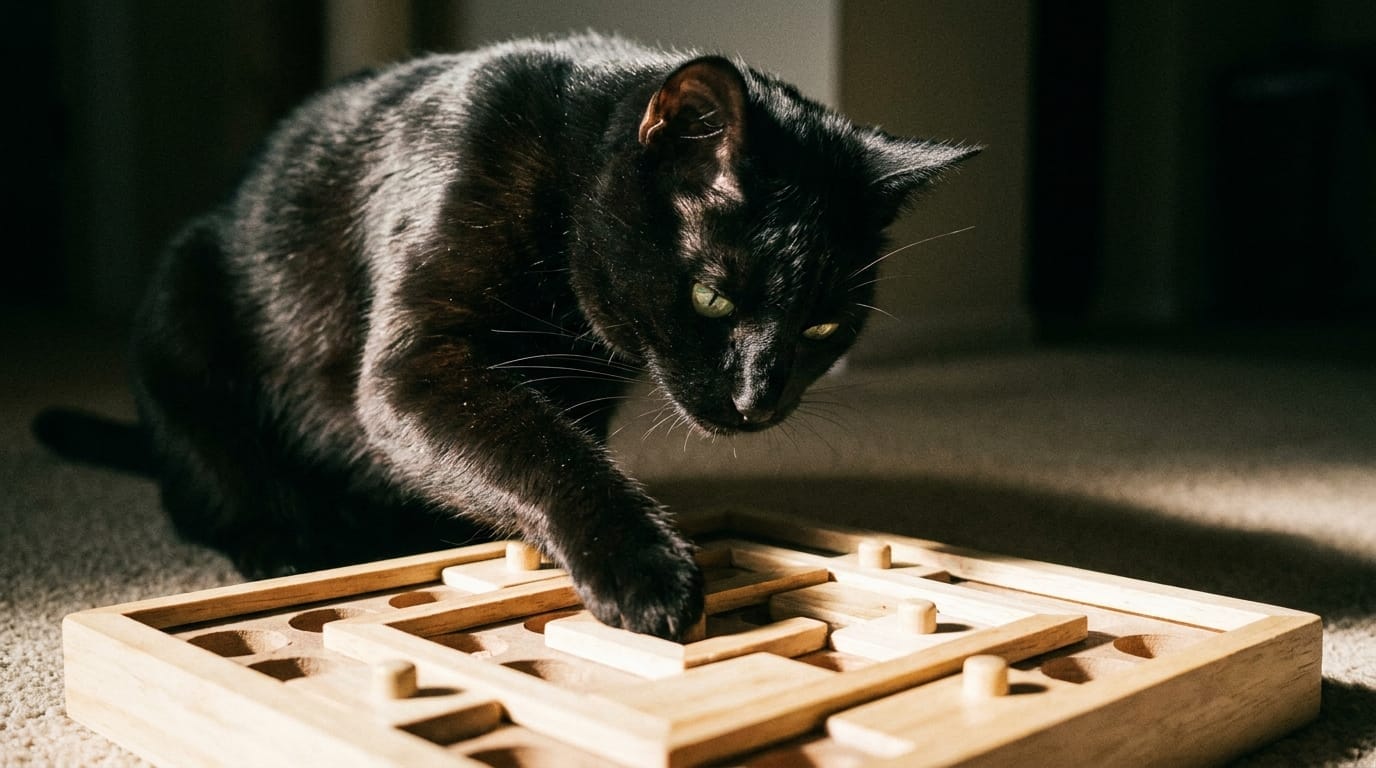
If learning was only about food, our pets would be little more than furry vending machines. The truth is, while a tasty morsel is a powerful motivator, it’s only one tool in a vast cognitive toolbox. Animals, much like us, are driven by a complex web of motivations. They learn through observation, a process called social learning. A younger dog often learns the household rules faster simply by watching and mimicking an older, more established dog. They solve problems not because a treat is waiting, but because of the intrinsic satisfaction of figuring something out, like how to nudge a puzzle toy just right to release the kibble inside.
This goes even deeper, into the emotional connection you share. For many dogs, a session of enthusiastic play or a simple, heartfelt 'Good boy!' can be just as, if not more, rewarding than a piece of cheese. This is because the bond itself is a primary driver. They aren't just performing tasks for payment; they are participating in a social contract with a trusted partner. Their ability to learn is deeply intertwined with their emotional state and their relationship with you. A secure, happy animal is a receptive and eager student, learning not just commands, but the very rhythm of our lives.

MYTH #2: You have to be the 'alpha' to get your pet to listen.
REALITY:
The whole 'alpha dog' concept is one of the most persistent and damaging myths in animal training. It’s based on flawed observations of captive, unrelated wolves from decades ago- a scenario that has almost no bearing on the dynamics of a wild pack, let alone a multi-species household. Forcing your pet into 'submission' or using intimidation tactics doesn't establish leadership; it establishes fear. An animal that is afraid is not in a state to learn. Its brain is flooded with stress hormones like cortisol, which shuts down the higher-thinking parts of the brain needed for problem-solving and memory retention.
Instead of a dictator, your pet needs a guide- a benevolent and predictable leader they can trust. Modern, evidence-based training is built on a foundation of mutual respect and clear communication. It’s about setting clear boundaries and rewarding the choices you want to see, creating a positive feedback loop that makes learning feel like a fun game. This approach doesn't just teach commands; it builds confidence and strengthens your bond. Your pet listens not because they fear punishment, but because they trust your guidance and understand that cooperation leads to wonderful things, like praise, play, and security.

MYTH #3: Cats are too independent and aloof to be trained.
REALITY:
To say a cat cannot be trained is like saying a fish cannot climb a tree- it's judging an animal by the wrong standard. Cats are absolutely trainable, but you have to speak their language. Unlike dogs, who were bred over centuries for cooperative work with humans, domestic cats are solitary hunters by nature. Their motivation isn't rooted in pleasing a pack leader; it's rooted in what benefits them directly. This doesn't make them selfish or untrainable; it just means you need a different strategy.
The key is to tap into their natural instincts. Clicker training, for instance, works brilliantly with cats because it provides a clear, immediate marker (the click) that a reward is coming, satisfying their need for cause-and-effect. You can teach them everything from 'sit' and 'high-five' to coming when called. Training also provides essential mental stimulation that a bored indoor cat craves, preventing destructive behaviors. It’s not about obedience in the canine sense, but about engaging their sharp intelligence and turning a learning session into an enriching part of their day.
Moving beyond the simple mechanics of 'sit' and 'stay' opens up a new world of understanding. When we stop seeing our pets as subjects to be commanded and start seeing them as intelligent beings with complex cognitive and emotional lives, our entire relationship transforms. It ceases to be about dominance and obedience and becomes a true partnership built on communication, trust, and a shared joy in learning together. The greatest trick isn't teaching them to roll over; it's learning to see the brilliant mind that was looking back at you all along.

Comments ()