

That Weird Face They Make

Understanding the 'Stink Face'
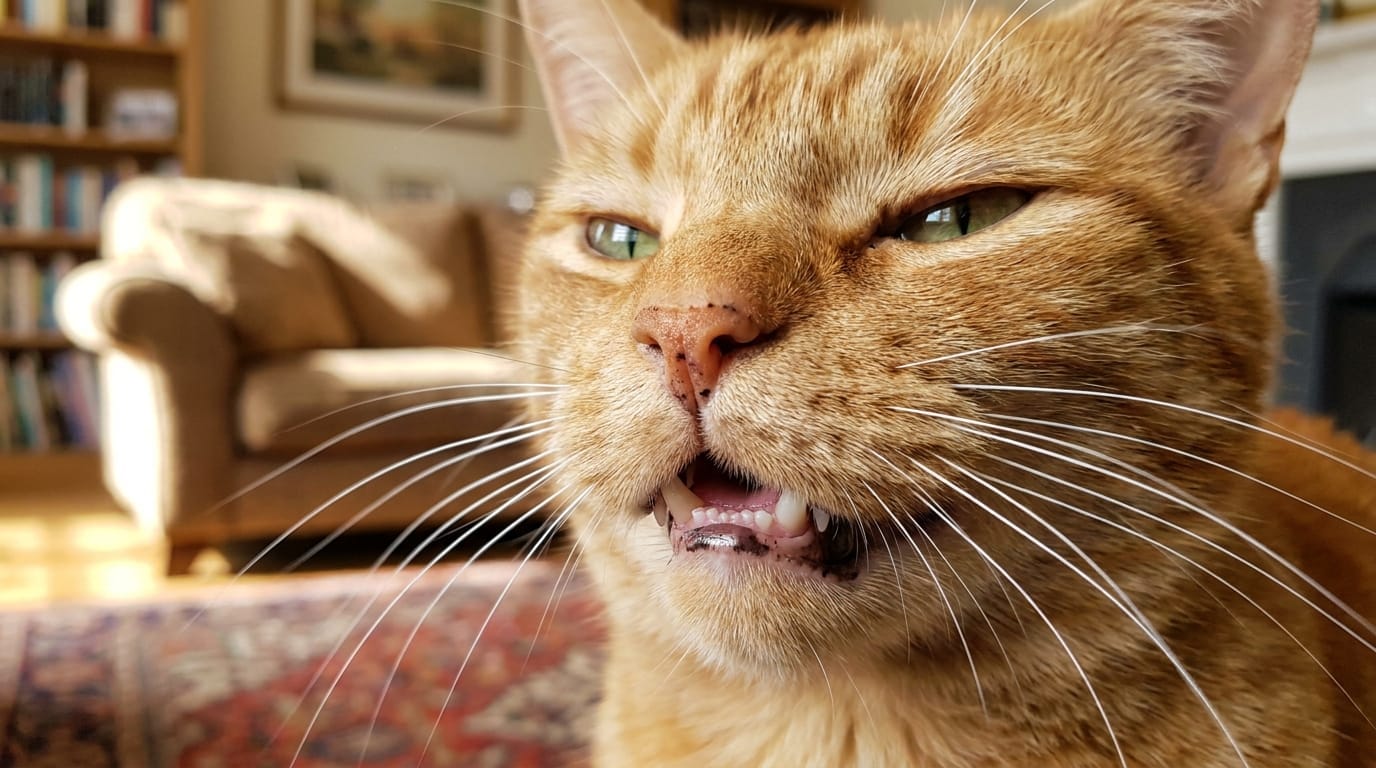
Your cat sniffs something. Its mouth opens slightly. The upper lip curls back, baring its teeth in what looks like a sneer. This is not a sign of disgust or aggression. It is a specific, calculated biological action.
This behavior is the Flehmen response. It is a method for deeply analyzing a scent. The animal actively draws air over a special sensory organ to gather extremely detailed chemical information from its environment.
The Science Behind the Sniff
The key to this action is the vomeronasal organ, also known as Jacobson's organ. It sits on the roof of the mouth, just behind the front teeth. The Flehmen response is a physical mechanism that funnels scent particles directly to this organ.
This organ specializes in detecting non-volatile chemicals, primarily pheromones and specific hormones. It provides a level of data far beyond what the nose alone can process. Your pet is conducting a serious chemical investigation, not just smelling.
A Widespread Animal Trait
This is not exclusive to your house cat. A huge range of mammals use this powerful technique. It is a fundamental part of their sensory world, essential for communication, reproduction, and survival.
You will see this behavior across the animal kingdom. It is common in many species you might encounter, including:
- Horses and goats, especially when investigating urine from other animals.
- Big cats like lions and tigers when assessing territory markings.
- Even some reptiles, like snakes, use a version of this sense to interpret their surroundings.
What This Behavior Means
Do not be alarmed by the Flehmen response. It is a sign of a curious, engaged animal using its full sensory toolkit. It shows your pet is actively exploring and learning about its environment in a way humans cannot.
That strange face simply means your pet has found a scent worth a deeper look. It's a mark of their incredible biology at work. Observing these small behaviors is the key to truly understanding the animals we live with.

Comments ()