

The Dangers of Apathy: Why Pet Boredom is a Serious Welfare Issue and How to Fix It
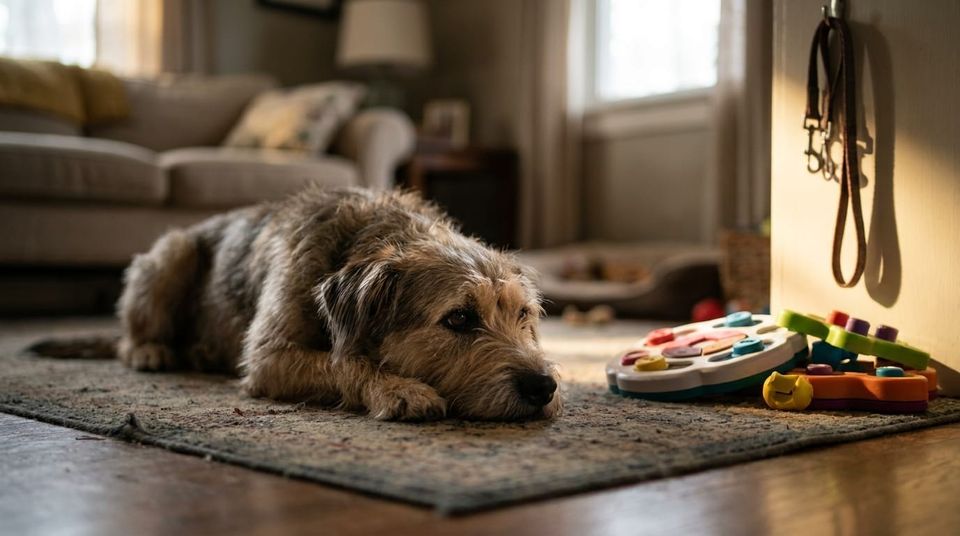
You provide food, water, a warm place to sleep, and all the love you can give. Yet, you might be overlooking a silent threat to your pet's well-being, one that hides in plain sight during the quiet hours of the day: boredom. The gap between a pet that simply exists in your home and one that truly thrives is often filled with meaningful engagement. Apathy is the enemy of a fulfilled life, for them as much as for us. It's time to recognize that a stimulated mind is as important as a full belly and build the bridge to a more vibrant life for your companion.
Before: The Silent Signs of a Stifled Mind
In this state, your home may feel more like a holding cell than a haven. The signs are often misinterpreted as simple 'bad behavior'. You might see a dog that relentlessly chews on furniture, barks at every shadow, or digs craters in the backyard. You might have a cat that obsessively over-grooms, scratches everything but the scratching post, or becomes withdrawn and listless. These are not acts of defiance; they are desperate signals from a mind starved of stimulation. An under-challenged brain seeks any outlet, and destructive habits are often the easiest ones to find.
The consequences go far deeper than a ruined pair of shoes. Chronic boredom can lead to significant psychological distress, manifesting as anxiety, compulsive behaviors, and even a state of learned helplessness that looks a lot like depression. A pet stuck in this cycle isn't just bored-it's suffering. This is the reality for countless animals whose environment is safe and loving, but static and predictable. They are trapped in a loop of sameness, with no problems to solve, no novelties to explore, and no way to express the incredible instincts hardwired into their DNA.
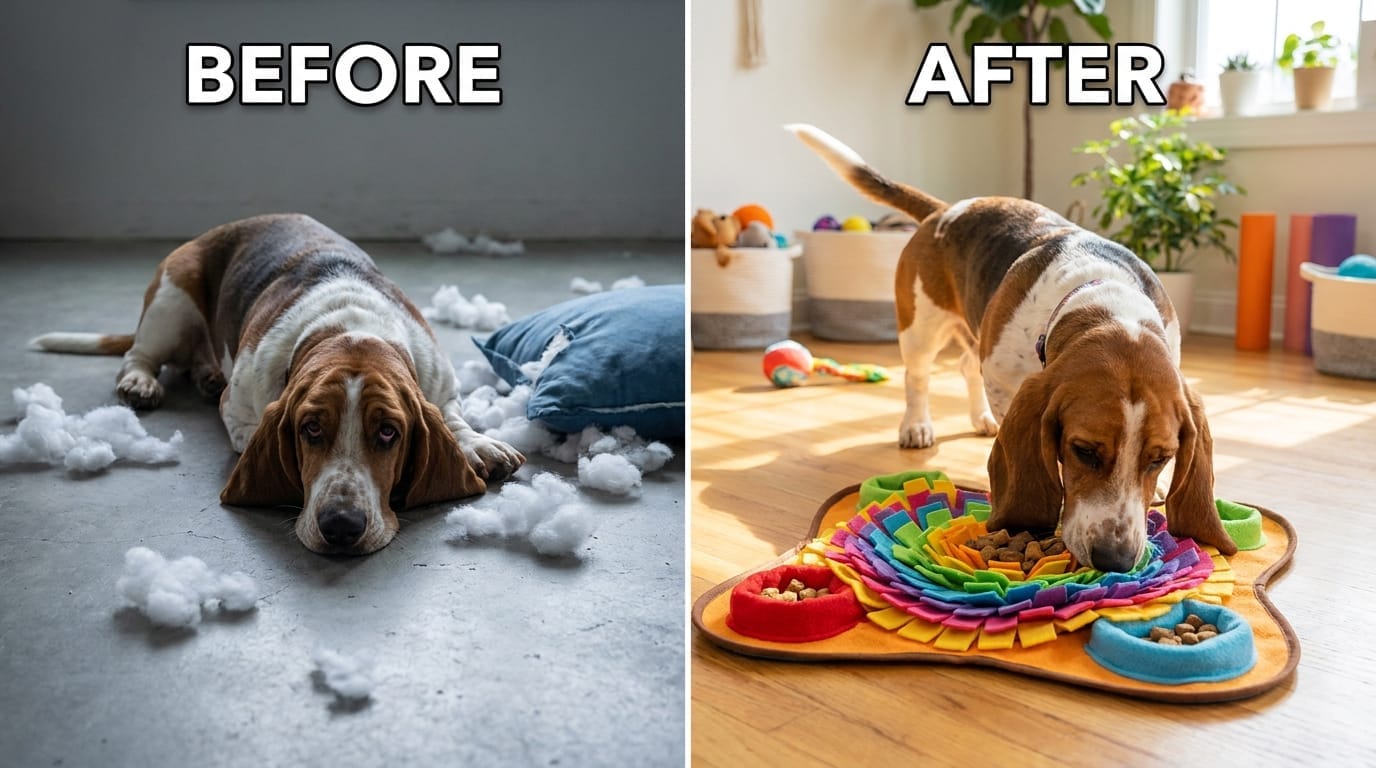
After: An Engaged, Thriving, and Joyful Companion
Imagine a different reality. You walk in the door not to a scene of destruction, but to a pet that is calm, content, and happy to see you. This is the world where your dog's energy has been channeled into productive play and learning, leaving them peacefully tired instead of anxiously buzzing. Your cat, rather than hiding or acting out, confidently navigates their territory, engaging with puzzle toys and watching the world from a prized window perch. The frantic energy of boredom is replaced by the quiet confidence of a fulfilled animal.
This transformation strengthens the bond you share in profound ways. When you become the source of fun, challenge, and engagement, you become the center of their world in a much more meaningful way. Behavioral problems diminish because the root cause-a lack of mental occupation-has been addressed. You're no longer just a provider of food, but a partner in adventure. The immense satisfaction that comes from seeing your pet truly happy, with bright eyes and a curious mind, is the ultimate reward. You are not just their owner; you are the architect of their well-being.
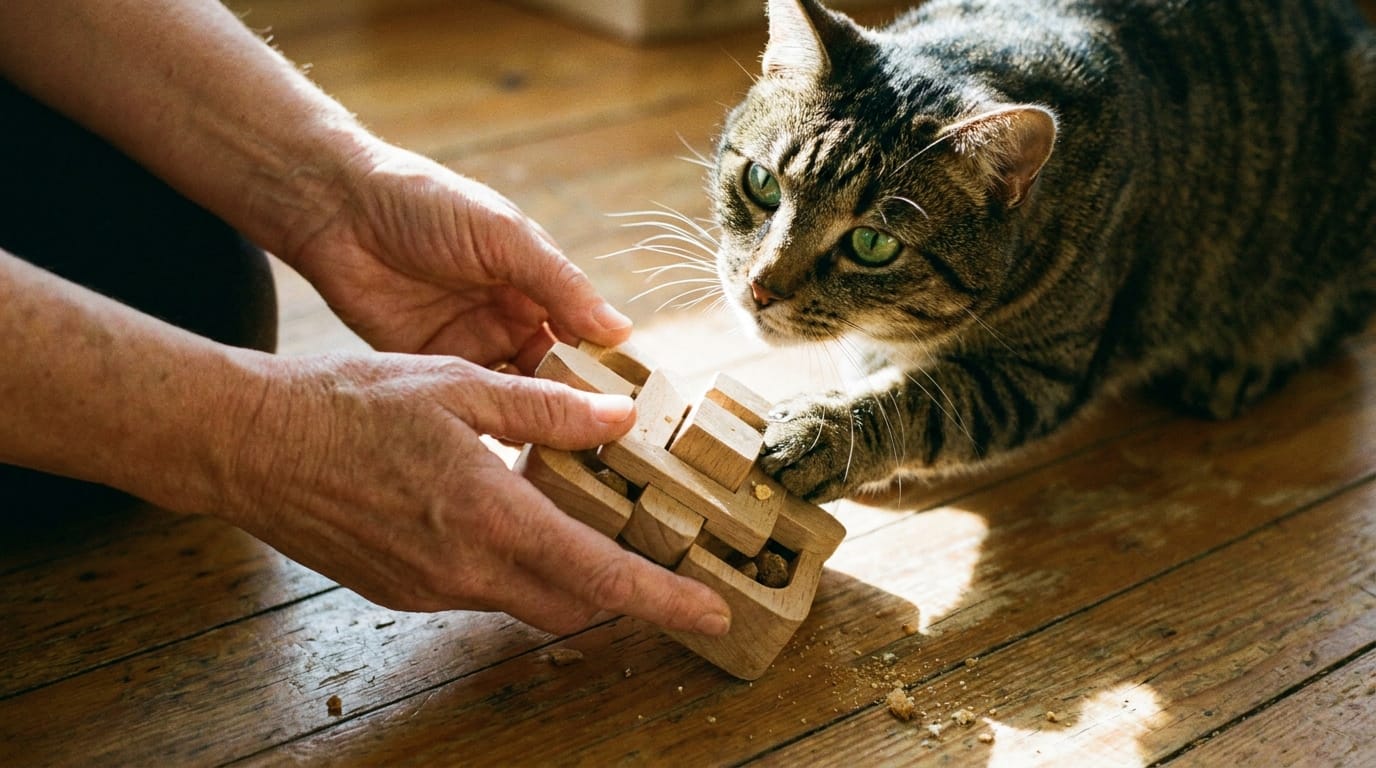
The Bridge: How to Get There
Moving from a state of passive existence to active engagement is simpler than you think. It's not about a complete overhaul of your life, but about incorporating small, powerful habits into your routine. This is your blueprint for building a richer world for your pet, starting today.
- Rotate Their Resources. Keep a majority of your pet's toys hidden away and introduce a 'new' set each week. Novelty is a powerful brain stimulant. An old toy that has been gone for a month can feel brand new and exciting all over again.
- Make Mealtime a Mission. Ditch the standard food bowl. Instead, use puzzle feeders, snuffle mats, or simply hide their kibble in various spots around a room. This forces them to use their brain and natural foraging instincts to 'earn' their food, which is incredibly satisfying for them.
- Engage Their Primary Senses. For dogs, simple 'scent work' games where you hide a high-value treat can be more tiring than a long walk. For cats, securely placing a bird feeder outside a main window creates captivating 'cat TV' that engages their predatory focus for hours.
- Introduce Short Training Sessions. You don't need to teach complex commands. Just 5-10 minutes a day working on a new trick or reinforcing an old one provides a fantastic mental workout. It burns energy, builds confidence, and strengthens your communication.
- Change the Scenery. For dogs, this means varying your walking route, visiting a new park, or exploring a pet-friendly trail. For indoor cats, periodically rearranging furniture, adding new vertical spaces like a cat tree, or bringing in a cardboard box can completely refresh their environment.
This bridge is built on one simple principle: intention. By intentionally creating small challenges and novel experiences, you give your pet a 'job' to do. You are giving them purpose. You now have the knowledge and the tools to transform your home from a place of passive waiting into a dynamic environment of discovery, joy, and deep connection.

Comments ()